
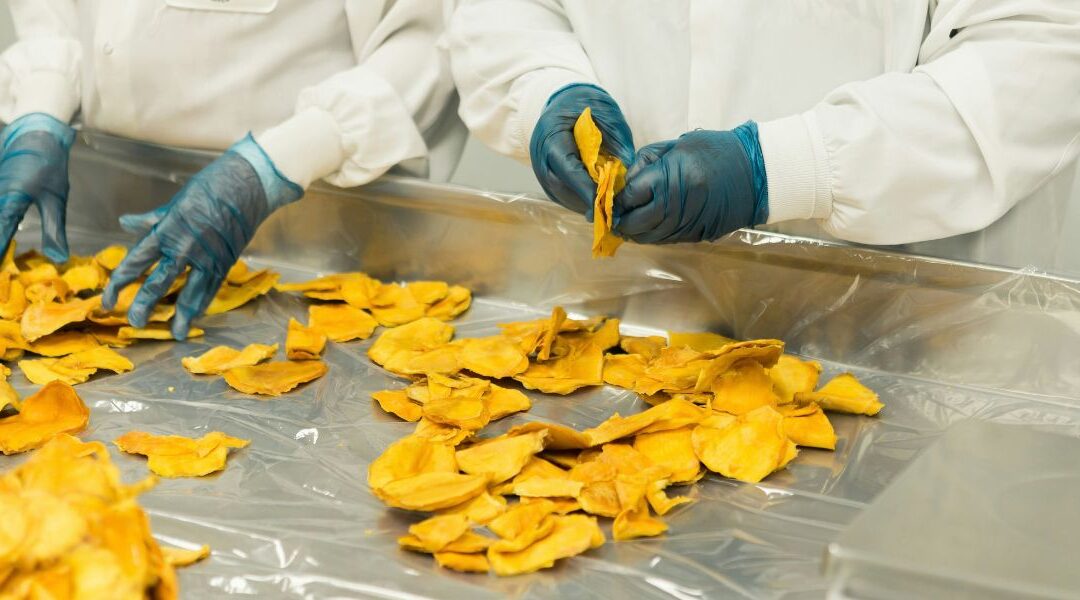
Food safety and nutraceutical quality are no longer managed solely through end-product testing. The regulatory frameworks governing high-care food processing and dietary supplement manufacturing have shifted decisively toward process-based contamination control, building quality into the production environment rather than attempting to detect failures after they occur. For manufacturers operating in these sectors, the controlled environment is not a peripheral infrastructure consideration. It is a direct determinant of product safety, regulatory compliance, and commercial viability.
The softwall cleanroom has emerged as the practical solution of choice for a growing number of food and nutraceutical producers who require genuine, verifiable contamination control without the capital cost, construction time, and inflexibility of permanent hardwall cleanroom infrastructure. This article examines why softwall cleanrooms are well suited to food and nutraceutical production, what contamination control and ISO classification requirements apply, and what material and sanitation considerations must guide the equipment specification.
Contamination Control Requirements in Food Processing Cleanrooms
Food processing contamination risks fall into three main categories: microbiological, physical, and chemical. Each category requires a different engineering response, and an effective cleanroom specification must address all three simultaneously.
Microbiological contamination is the primary concern in high-care and high-risk food processing environments. Airborne bacteria, yeasts, moulds, and bacterial spores are present in ambient air at concentrations that, while harmless in most contexts, can initiate spoilage or cause pathogenic contamination in open food products. High-care zones – where ready-to-eat products are handled after their final heat treatment – require controlled air quality to prevent post-process microbial contamination from airborne sources. High-risk zones, where the risk of pathogen survival and cross-contamination is particularly acute, demand more stringent environmental controls.
For nutraceutical manufacturers, microbiological contamination carries additional regulatory weight. Dietary supplements – including vitamins, probiotics, herbal extracts, and protein powders – are regulated in most markets as food products but are held to manufacturing standards that increasingly reference pharmaceutical GMP principles. Total aerobic microbial count, total yeast and mould count, and the absence of specified pathogens are standard finished-product specifications, and exceedances trigger recalls, regulatory notifications, and reputational consequences that the nutraceutical sector cannot absorb lightly.
Physical contamination – particles, fibres, insect fragments, and foreign material – is managed in a cleanroom environment through HEPA filtration of supply air, unidirectional airflow patterns that sweep particles away from open product, and the physical separation of the production area from less-controlled zones. The positive pressure differential maintained in a cleanroom prevents unfiltered external air from infiltrating the controlled zone, eliminating one of the most common sources of physical contamination in conventional food manufacturing spaces.
Chemical contamination in food and nutraceutical cleanrooms includes cleaning agent residues, lubricants, packaging materials off-gassing, and cross-contamination between product batches. Cleanroom design addresses chemical contamination through material selection – equipment and surfaces that do not off-gas, are chemically stable under cleaning and disinfection, and support complete surface cleaning – and through physical segregation between product families or allergen risk categories.
ISO Classification Levels for Food and Supplement Production Cleanrooms
ISO 14644-1 provides the classification framework for cleanrooms across all industries, and its application in food and nutraceutical manufacturing is increasingly referenced in sector-specific guidance documents and customer audit requirements. Understanding which ISO class is appropriate for different food production operations is essential for specifying a softwall cleanroom that delivers genuine contamination control rather than simply meeting a nominal classification.
ISO Class 7 (100,000 particles per cubic metre at ≥ 0.5 µm) is the baseline classification typically applied to high-care food processing areas and nutraceutical manufacturing zones where product is exposed to the environment during filling, blending, or packaging operations. This classification level, achieved through HEPA-filtered air supply and controlled air change rates, provides sufficient reduction in airborne particle and microbial load to meet the total viable count specifications of most nutraceutical finished product standards and the environmental monitoring requirements of food safety certification schemes such as BRC Global Standard for Food Safety and IFS Food.
ISO Class 6 (35,200 particles per cubic metre at ≥ 0.5 µm) is specified for more demanding applications — including sterile nutraceutical formats, injectables classified as food products in some regulatory frameworks, and certain probiotic production environments where the viable organisms being produced are also the primary contamination risk to non-probiotic product areas. Achieving ISO Class 6 in a softwall cleanroom requires higher ceiling FFU density and more rigorous air change rates than ISO Class 7, but remains achievable within a softwall enclosure framework.
ISO Class 8 (3,520,000 particles per cubic metre at ≥ 0.5 µm) applies to controlled packaging areas, ingredient storage rooms, and ancillary production zones where the contamination sensitivity is lower but environmental control remains preferable to ambient conditions. Many food manufacturers use ISO Class 8 controlled areas as buffer zones between the high-care production environment and the general factory, providing a graduated contamination control approach that reduces the ingress risk to higher-classification inner zones.
The appropriate ISO classification for a specific food or nutraceutical production operation should be determined through a risk assessment that considers the product’s microbiological sensitivity, its intended consumer population, the applicable regulatory and certification standards, and the degree of product exposure during processing. A softwall cleanroom can be designed and validated to any of these classification levels, with the ceiling FFU configuration, supply air filtration, and room pressure management adjusted to meet the specified particle count limits.
Why Softwall Solutions Are Cost-Effective for Food Cleanrooms
The cost-effectiveness of softwall cleanrooms for food and nutraceutical applications derives from four interconnected advantages: lower capital cost, faster deployment, operational flexibility, and simplified regulatory management.
Capital cost is the most immediately visible advantage. A softwall cleanroom – consisting of an aluminium extrusion frame system, clear or opaque vinyl panel walls, ceiling-mounted fan filter units, and a floor system – requires no building permits, no structural modifications to the host facility, and no specialist cleanroom construction contractors. The materials cost and installation labour for a softwall enclosure is typically a fraction of the equivalent hardwall construction, for equivalent ISO classification performance.
Deployment speed is the second major advantage. A softwall cleanroom can be designed, manufactured, delivered, and erected within weeks rather than the months required for permanent cleanroom construction. For food and nutraceutical manufacturers responding to new product launches, seasonal production increases, or contract manufacturing opportunities, this speed-to-production capability is a genuine commercial differentiator.
Flexibility is particularly valuable in sectors where product ranges change, production volumes fluctuate, and manufacturing footprints are periodically reconfigured. A softwall cleanroom can be dismantled, relocated within the same facility, reconfigured to a different floor area, or transferred to a new site without construction work. This relocation and reconfiguration capability allows capital investment in cleanroom infrastructure to follow the business rather than constraining it.
Regulatory management is simplified for softwall cleanrooms in food and nutraceutical contexts because the enclosure – unlike a permanent room – is classified as equipment rather than a building modification in most regulatory frameworks. This means that changes to the softwall cleanroom can be managed through the facility’s equipment change control process rather than requiring new building approvals or planning consents.
Materials and Sanitation Compatibility in Food Cleanrooms
The material specification of a softwall cleanroom for food and nutraceutical use must satisfy requirements that differ from pharmaceutical or electronics cleanroom applications in one important respect: food contact material regulations and food-safety-specific sanitation protocols apply to any surface that could directly or indirectly contact food products.
The frame system of a food industry softwall cleanroom should be constructed from anodised aluminium or stainless steel, both of which are listed as acceptable materials under EU Regulation 1935/2004 on materials and articles intended to contact food. Anodised aluminium is the standard choice for softwall frame systems: it is lightweight, corrosion-resistant, and compatible with the quaternary ammonium compounds, peracetic acid solutions, and food-safe sanitisers standard in high-care food production environments.
The panel material – typically clear PVC vinyl – must be specified for food contact or food proximity use, verifiable through a declaration of compliance under the applicable food contact materials regulation. PVC panels should be plasticiser-free or use food-approved plasticisers, and should be resistant to the disinfectants used in the production environment without discolouration, hardening, or cracking over their service life. The ability to wipe-clean panel surfaces with standard food-safe sanitisers is a practical requirement that should be verified with the panel material supplier before specification.
The fan filter units and HEPA filters installed in the ceiling of a food industry softwall cleanroom should be specified for food environment service, with housings constructed from materials that are compatible with washdown cleaning and with panel finishes that do not shed particles or support microbial colonisation. FFU housings in powder-coated steel are acceptable for most food applications; stainless steel housings are preferred in wash-down environments or where the FFU may be directly contacted by cleaning operations.
AGMM TECH Softwall Cleanrooms for Food and Nutraceutical Producers
AGMM TECH manufactures softwall cleanroom enclosures suited to the contamination control requirements and sanitation demands of food and nutraceutical production environments. The enclosure system uses anodised aluminium frame profiles with clear or opaque PVC panel infill, configurable in floor area, height, door configuration, and access arrangements to match the specific production layout and workflow requirements of the client facility.
Ceiling-mounted ECM-motor fan filter units with HEPA H14 filtration deliver the air change rates required to achieve and maintain ISO Class 6 to ISO Class 8 conditions within the enclosure. FFU configurations are designed to provide uniform ceiling coverage and consistent airflow distribution across the full floor area, supporting ISO 14644-1 classification verification at installation. Variable speed ECM motors allow airflow to be adjusted without fan replacement, providing operational flexibility as production volumes and process activities change.
The softwall cleanroom system is compatible with the sanitation protocols standard in food and nutraceutical production environments. Panel surfaces and frame profiles are specified for compatibility with quaternary ammonium compounds, peracetic acid, and isopropyl alcohol – the disinfectants most commonly used in high-care food production areas. Installation qualification documentation, including airflow uniformity test data and particle count verification, is available to support food safety certification audits and customer qualification inspections.
For food and nutraceutical producers requiring a complete contamination control solution – including an air shower at personnel entry, a pass box for material transfer, and laminar flow hoods at critical process workstations within the softwall enclosure – AGMM TECH’s product range provides a coordinated equipment approach from a single manufacturer, with consistent documentation and qualification support across the installation.
Conclusion
The softwall cleanroom for food and nutraceutical production is not a compromise between contamination control performance and operational practicality. A well-specified softwall enclosure delivers genuine ISO-classified air quality, supports the sanitation protocols required in high-care food environments, and provides the operational flexibility that food and nutraceutical manufacturers need to respond to changing production demands. The capital cost advantage over permanent cleanroom construction, combined with deployment speed and reconfiguration capability, makes the softwall cleanroom the practical default choice for controlled environment requirements in the food and nutraceutical sector. AGMM TECH’s softwall cleanroom systems are designed and documented to meet these requirements, providing food and nutraceutical producers with a verifiable, audit-ready controlled environment that supports both product quality and regulatory confidence.


